

Overview
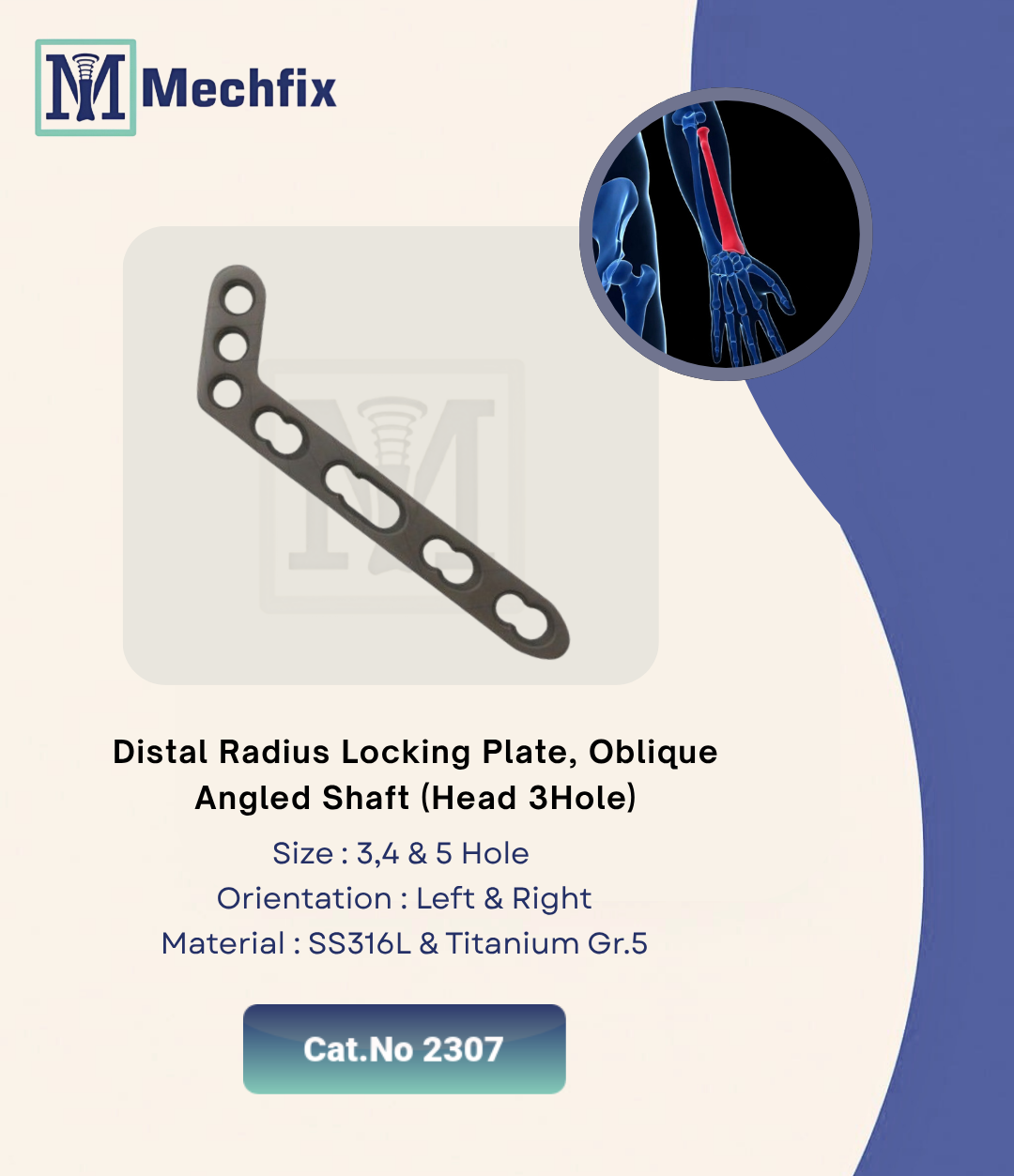
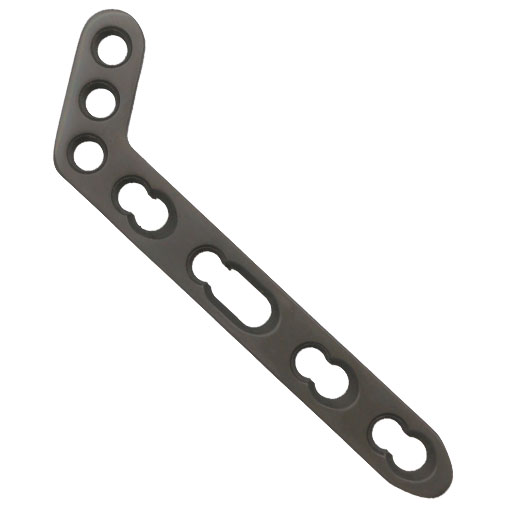
The Distal Radius Locking Plate Oblique Angled Shaft (Head 3 Hole) is a high-performance orthopedic implant designed for the precise fixation and stabilization of distal radius fractures, particularly those requiring angled support for improved alignment. This specialized plate features an oblique angled shaft and a 3-hole head, making it ideal for fractures that demand enhanced mechanical stability and precise anatomical positioning. Crafted from high-strength titanium or stainless steel, it provides superior durability and strength while minimizing the risk of hardware failure during the healing process.
Key Features
-
Oblique Angled Shaft Design: The oblique angle of the shaft is strategically engineered to optimize fracture alignment, providing better support for fractures that require angled stabilization. This design helps in addressing complex fracture patterns where traditional plates may not provide sufficient support.
-
3-Hole Head Configuration: The plate features a 3-hole head, allowing for secure and reliable screw fixation, enhancing fracture stability and preventing hardware migration or loosening.
-
Locking Mechanism: The locking screw system ensures that screws are securely anchored in place, providing superior stability, especially in osteoporotic or compromised bone. The locking mechanism helps reduce the risk of screw loosening or plate displacement, promoting long-term fracture healing.
-
Anatomical Fit: The plate is designed to follow the natural anatomy of the distal radius, offering a precise, low-profile fit that minimizes soft tissue disruption during surgery. This anatomical design helps reduce the need for extensive bone manipulation during implantation.
-
High-Strength Material: Manufactured from premium titanium alloy or medical-grade stainless steel, the Distal Radius Locking Plate offers exceptional strength, durability, and biocompatibility. This ensures that the plate can withstand the mechanical loads required for stable fracture fixation over time.
-
Minimally Invasive Application: The plate’s design allows for a minimally invasive surgical approach, helping to reduce the risk of complications such as infection or prolonged swelling, and supporting faster recovery.
Indications for Use
-
Distal radius fractures requiring oblique stabilization
-
Comminuted or complex fractures where precise anatomical alignment is critical
-
Osteoporotic fractures where enhanced fixation is necessary to maintain alignment during the healing process
-
Post-traumatic deformities that require stable fixation to restore anatomical structure
-
Fractures involving the distal radius with varying degrees of complexity, where angled plate fixation is beneficial
Benefits
-
Enhanced Fracture Stability: The oblique angled shaft and locking mechanism provide superior fracture stability, minimizing the risk of displacement and promoting faster, more reliable healing.
-
Improved Healing Outcomes: The anatomical design of the plate helps maintain proper alignment of the fractured bones, reducing the risk of malunion or nonunion.
-
Reduced Risk of Hardware Failure: The locking screw system ensures that screws remain securely in place, preventing loosening and migration, which can complicate the healing process.
-
Efficient Surgical Procedure: The design of the plate simplifies the surgical procedure, allowing for easier implantation and reducing operating time.
-
Minimized Soft Tissue Disruption: The plate’s low-profile design minimizes trauma to surrounding soft tissues, reducing post-operative pain and enhancing recovery times.
Why Choose the Distal Radius Locking Plate Oblique Angled Shaft (Head 3 Hole)?
The Distal Radius Locking Plate Oblique Angled Shaft (Head 3 Hole) is specifically designed for surgeons who need a reliable solution for complex distal radius fractures requiring oblique fixation. Whether dealing with osteoporotic bone or a multi-fragmented fracture, this plate offers optimal mechanical support and stability. With its anatomical fit, durable material, and locking screw technology, this plate provides surgeons with the tools needed to ensure successful, long-lasting fracture healing. Its minimally invasive design further promotes faster recovery, making it a trusted choice in modern orthopedic practices.